So, you've probably heard the buzz about RWAs, or Real-World Assets, and how they're shaking things up in the finance world. Basically, it's all about taking stuff we know and use every day – like buildings, art, or even gold – and turning them into digital tokens on a blockchain. Think of it as giving these physical things a digital twin that's way easier to trade and manage. It's like bridging the gap between your physical wallet and your digital one, making big investments way more accessible to pretty much anyone. The whole rwa.ai space is growing fast, and it's worth understanding what's really going on.
Key Takeaways
- RWAs are real-world assets, like property or gold, that are converted into digital tokens on a blockchain.
- Tokenizing RWAs makes them easier to trade, manage, and invest in, bringing liquidity to traditionally illiquid assets.
- Fractional ownership is a big deal, letting people own small pieces of expensive assets they couldn't afford otherwise.
- Blockchain technology provides transparency, security, and allows for 24/7 trading of these tokenized assets.
- The RWA market is growing fast, with big financial players getting involved, but challenges like regulatory uncertainty still exist.
Understanding RWA Tokenization
What Are Real-World Assets?
So, what exactly are we talking about when we say "real-world assets" or RWAs? Basically, it's anything tangible or with a defined value that exists outside the digital world of crypto. Think about things like buildings, land, gold, or even company stocks and bonds. These are assets that have a physical presence or a legal claim to value that we're all familiar with in our everyday financial lives. They're the bedrock of traditional finance, and now, they're starting to get a digital makeover.
Bridging The Physical And Digital Divide
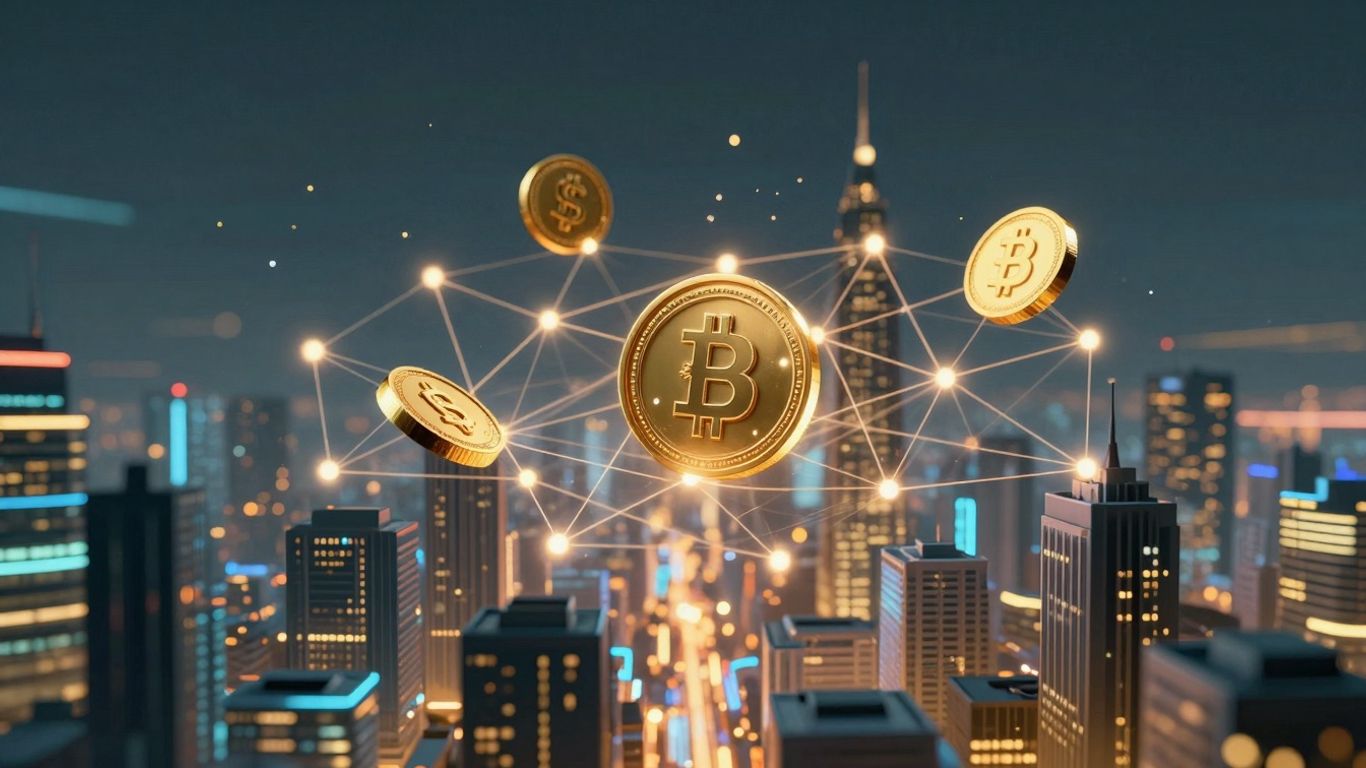
This is where tokenization comes in. It's like building a bridge between the old-school financial world and the new blockchain universe. Tokenization takes a real-world asset and creates a digital version of it, a "token," that lives on a blockchain. This token acts as proof of ownership or a claim to a portion of that asset. Imagine owning a tiny piece of a skyscraper or a share of a government bond, all represented by a digital token you can hold in your crypto wallet. This process makes it possible to trade, manage, and even divide ownership of assets that were previously hard to split or move around easily. It's a way to bring the benefits of blockchain – like speed, transparency, and accessibility – to assets that have always existed in the physical world.
The Mechanics Of Tokenization
How does this digital magic actually happen? It's a multi-step process, but at its core, it involves a few key things:
- Asset Identification and Valuation: First, you need to pick an asset and figure out exactly what it's worth and who legally owns it. This sounds simple, but for things like art or complex financial instruments, it can get tricky.
- Legal Framework: You need to make sure the token legally represents ownership or a claim to the underlying asset. This involves lawyers and making sure everything lines up with existing financial rules.
- Smart Contract Creation: Developers create a "smart contract" on a blockchain. This is like a digital agreement that automatically handles things like ownership transfers, dividend payments, or interest distribution based on pre-set rules.
- Token Issuance: The smart contract then issues digital tokens. Each token represents a specific share or right related to the real-world asset.
- Storage and Management: The data about the asset and the tokens themselves need to be stored securely. This often involves decentralized storage solutions to keep the information safe and accessible.
The goal is to make owning and trading parts of big, expensive things as easy as buying and selling digital art online. It's about breaking down big assets into smaller, manageable digital pieces.
The Evolving RWA Landscape
So, what's actually happening with real-world assets (RWAs) on the blockchain? It's not just a bunch of talk anymore. We're seeing actual money move and real assets get tokenized, but it's not exactly a free-for-all. The space is developing, and certain types of assets are leading the way.
Private Credit Leads The Charge
Right now, private credit is where most of the action is. Think of it as loans that aren't traded on public exchanges. Companies are tokenizing these loans, making them easier to buy and sell. This is a big deal because it gives borrowers access to capital more easily than traditional banks might allow. Plus, investors can get decent returns, often in the double digits, without having to deal with the wild swings of crypto prices. It's a pretty practical use case that's gaining serious traction.
Treasury Bonds Gain Traction
Another area that's really picking up steam is tokenized treasury bonds. These are essentially IOUs from governments, considered pretty safe investments. By tokenizing them, people, especially those in the crypto world, can easily invest in them. It's a smart move because it brings a stable, income-generating asset onto the blockchain. Big names in finance are getting involved, making these investments more accessible. It's a clear sign that traditional finance is starting to see the benefits of blockchain technology.
Beyond Traditional Assets
But it's not just about loans and bonds. The tokenization trend is expanding into other areas too. We're starting to see things like intellectual property, future earnings from artists, and even things like water rights being explored for tokenization. It's like we're finding new ways to put a price on things that were previously hard to trade. This opens up possibilities for more diverse investments and creates new markets for assets that didn't really exist before. It's a bit wild to think about owning a piece of a patent, but that's the direction things are heading.
The RWA market is still a small slice of the global financial pie, but it's growing fast. The key is that tokenization is being applied where it actually makes financial sense, not just for the sake of using new technology. This practical approach is what's driving the current momentum.
Here's a quick look at where things stand:
- Private Credit: The biggest segment currently, with billions in active loans. Offers higher yields for investors and easier capital access for borrowers.
- Treasury Bonds: Growing rapidly, providing access to safe, income-generating assets on-chain.
- Emerging Assets: Exploration into tokenizing intellectual property, future royalties, and other unique assets is expanding the definition of what can be traded.
This evolution shows that RWAs are moving beyond just hype and becoming a more integrated part of the financial system, focusing on real-world utility and efficiency.
Infrastructure And Bottlenecks
So, we've talked about what RWAs are and why people are excited. But let's get real for a second. Building this stuff isn't as simple as flipping a switch. There are some serious hurdles to jump over before tokenized assets become as common as, well, regular assets.
The Oracle Layer's Crucial Role
Think of oracles as the messengers between the real world and the blockchain. They're supposed to feed accurate, up-to-date information about the physical asset – like its value, ownership details, or performance – onto the blockchain so smart contracts can do their thing. This connection is absolutely vital, but it's also a major weak spot. If the oracle gives bad data, the whole system breaks. For example, if you have a token backed by gold, the oracle needs to confirm that the gold actually exists and is stored safely. For tokenized real estate, it needs to report things like rental income or property value changes. Getting this data reliably and securely is a big challenge.
Data Infrastructure Challenges
Beyond just the oracles, the whole system for handling data needs to be solid. We're talking about making sure the information is correct, that it can be accessed when needed, and that it's protected. Right now, if the data systems aren't up to par, tokenized assets can feel a bit like fancy IOUs. They rely heavily on outside systems working perfectly, which isn't always the case. This dependency is a big reason why we're not seeing wider adoption yet.
Scaling Liquidity For RWAs
This is a big one. Even with all the cool tech, if nobody can easily buy or sell these tokenized assets, what's the point? We need markets where there are plenty of buyers and sellers. Right now, for many tokenized assets, the buyer pool is pretty small. This is partly because the rules around trading them aren't always clear, and partly because the infrastructure for trading them isn't fully developed. It's a bit of a catch-22: you need liquidity to attract buyers, but you need buyers to create liquidity. Plus, trading these assets across different countries gets complicated fast because financial rules are different everywhere.
The path from a tokenized asset existing on a blockchain to it being a widely traded, trusted financial instrument involves a lot more than just smart contracts. It requires robust data feeds, secure storage for both digital and physical assets, and clear pathways for trading that comply with existing financial regulations. Without these pieces in place, the potential benefits of tokenization remain largely theoretical.
Here's a quick look at where things stand in some key RWA areas:
- Private Credit: Seeing good traction, with companies like Maple and Centrifuge leading. Around $15 billion is estimated in this space, driven by the search for better yields and more efficient lending.
- Treasuries/Money Market Funds: This is growing too, with big names like BlackRock and Franklin Templeton involved. It's estimated at about $7.5 billion, thanks to the demand for safe returns and institutions looking for collateral.
- Gold: Tokenized gold, like Tether Gold, has about $2.1 billion. People are using it as a hedge against inflation and as collateral in decentralized finance.
- Equities: This is still pretty small, under $100 million. It's held back by regulatory hurdles, though the idea of 24/7 trading is appealing.
While these numbers are growing fast, they're still a tiny fraction of the total global assets out there. The real test will be how well this infrastructure can scale and how smoothly it integrates with the existing financial world.
Institutional Adoption And Growth
Major Players Entering The Space
It's not just the crypto-native folks getting excited about tokenizing real-world assets anymore. Big financial institutions, the kind you see on Wall Street, are starting to pay serious attention. We're talking about companies like JPMorgan Chase, BlackRock, and Franklin Templeton. They're moving past just looking at the tech and actually putting resources into projects. Think of BlackRock's digital liquidity fund; they're taking traditional investment products and putting them on the blockchain. This shows they see a real use case for making things work better and reaching more people.
Market Size And Future Projections
The numbers are pretty wild when you look at how fast this market is growing. It's gone from a few billion dollars to tens of billions in just a couple of years. Some people are guessing that by 2030 or 2034, maybe 10% to 30% of all the assets in the world could be tokenized. That's a massive amount of money, over $400 trillion, potentially moving onto the blockchain. It feels like we're on the edge of something big, where a lot more of what we consider valuable will be represented by digital tokens.
Here's a quick look at the growth:
- 2023 Market Size (excluding stablecoins): ~$25 Billion
- Projected Tokenized Assets by 2030: 10-30% of global assets
- Global Asset Value: Over $400 Trillion
The Impact On Financial Institutions
Institutions are starting to realize that blockchain tech might just become a standard part of how finance works down the line. Getting involved with tokenization now, even with small projects, helps them figure out what the technology can and can't do. This way, they're better positioned to jump on opportunities as the rules and regulations catch up. It's less about a complete overhaul right now and more about learning the ropes and preparing for what's next.
The current trend suggests that tokenization will likely grow step-by-step. It might start with simple things like tokenizing money market funds or bank deposits in controlled settings. As the rules become clearer, we could see more complex trading of these assets on secondary markets.
Benefits And Opportunities
So, what's the big deal with tokenizing real-world stuff? It really boils down to making things more accessible and efficient. Think about it: you can now own a tiny piece of something super expensive, like a building or a rare piece of art, without needing a massive pile of cash. This fractional ownership is a game-changer, opening doors for a lot more people to get into investments that were previously out of reach.
Democratizing High-Value Investments
This is probably the most exciting part. Before tokenization, if you wanted to invest in, say, a commercial property or a high-end vineyard, you'd need serious capital. Now, that same investment can be chopped up into small, affordable tokens. This means your average person can participate, spreading their risk across different types of assets instead of just putting all their eggs in one basket. It's like going from a members-only club to a public park – everyone's invited.
Enhanced Financial Efficiency
Beyond just access, tokenization streamlines a ton of financial processes. Smart contracts, the automated agreements on the blockchain, can handle things like dividend payouts or interest payments automatically. This cuts down on a lot of manual work, reduces the chance of errors, and speeds things up considerably. Imagine bond payments happening instantly when they're due, without a team of people manually processing them. It also makes tracking and auditing assets much simpler, with a clear, unchangeable record of every transaction.
New Avenues For Yield Generation
Tokenizing assets also creates fresh ways to earn returns. For instance, you can now tokenize things like future royalties from an artist or even a portion of a company's future earnings. These aren't your typical stocks or bonds. They represent new types of income streams that can be invested in. Plus, by bringing these assets into the decentralized finance (DeFi) world, they can interact with existing DeFi protocols, potentially generating even more yield through lending or staking. It's about finding value in places we didn't really consider before.
The ability to break down large, illiquid assets into smaller, tradable units fundamentally changes who can invest and how. This isn't just about making money; it's about re-thinking what constitutes an investment and who gets to participate in wealth creation.
Here's a quick look at how different types of assets are benefiting:
- Real Estate: Allows for fractional ownership, making property investment accessible to more people and providing liquidity for property owners.
- Bonds and Debt: Automates coupon payments and maturity processes, reducing administrative overhead and increasing transparency.
- Art and Collectibles: Enables partial ownership of high-value items, creating new markets for collectors and investors.
- Intellectual Property: Allows creators to tokenize future royalties or licensing fees, providing upfront capital and new investment opportunities.
- Private Credit: Opens up access to loans and private debt instruments for a wider range of investors, previously only available to large institutions.
Navigating Challenges And The Future
The Importance Of Regulatory Clarity
Look, nobody likes a bunch of rules, but when it comes to money, especially new kinds of money like tokenized assets, clear regulations are a big deal. It's like trying to drive in a city without traffic lights or signs – chaos. Different countries are still figuring out how they want to handle these digital versions of real stuff. Some places are getting ahead of it, making actual laws, while others are still in the 'wait and see' phase. This patchwork of rules can make it tough for big companies to jump in and for regular folks to feel totally safe putting their money into tokenized assets. We need some solid guidelines so everyone knows what to expect and can trust the system.
Continuous Portfolio Optimization
So, you've got your tokenized assets, maybe some real estate tokens, some bonds, whatever. That's great. But just buying them and walking away? That's not really a plan. Markets change, things go up and down, and your own money goals might shift. That's where keeping your portfolio in shape comes in. It’s about making smart adjustments.
Here’s a quick rundown of what that looks like:
- Rebalancing: Think of your portfolio like a pie. If one slice (say, tokenized art) gets way too big because it's doing super well, it might be making your whole pie too risky. Rebalancing is just trimming that slice back and maybe giving a bit more to another slice that's not doing as much. It keeps things balanced.
- Performance Checks: You gotta look at how each asset is doing, and how the whole collection is performing. Are things on track?
- Goal Alignment: Does your portfolio still match what you're trying to achieve with your money? If your goals change, your investments might need to change too.
The Role Of AI In RWA Management
This is where things get pretty interesting, honestly. Artificial intelligence, or AI, is starting to become a real helper when it comes to managing these RWA portfolios. AI can look through mountains of data way faster than any person could. It can spot patterns, guess what might go wrong, and even help tailor your investment strategy just for you. Imagine having a super-smart assistant who's always watching the markets and your investments, giving you insights you might have missed. This means you can react faster to changes and potentially make better choices about your money. It's not about replacing human judgment entirely, but about giving investors better tools to make smarter decisions in a complex world.
Managing tokenized real-world assets isn't a one-and-done deal. It requires ongoing attention, smart tools, and a willingness to adapt as markets and your own financial situation evolve. It's about actively managing your investments, not just hoping for the best.
So, What's the Verdict on RWAs?
Alright, so we've talked a lot about Real-World Assets, or RWAs, and what all the fuss is about. It's clear this isn't just some fleeting trend. We're seeing actual money, billions of dollars, flowing into tokenized versions of things like government bonds and private loans. It’s not about getting rich quick with crazy crypto gains; it’s more about building a solid foundation, bringing traditional finance into the digital age in a sensible way. The real challenge now isn't just creating tokens, but making sure the systems behind them – like those 'oracles' that connect the real world to the blockchain – are solid. As things stand, RWAs are still a small piece of the giant financial puzzle, but they're growing fast. The next steps involve getting more money flowing, fixing those infrastructure kinks, and sorting out the rules, especially for things like stocks. It's a slow but steady process, quietly weaving traditional finance into the fabric of blockchains, one token at a time. What do you think? Where do you see this going next?
Frequently Asked Questions
What exactly are Real-World Assets (RWAs)?
Think of RWAs as things we can touch and see in our everyday lives, like buildings, cars, gold, or even art. When we talk about tokenizing them, it means we're creating a digital version of ownership for these physical items on a blockchain. It's like getting a digital certificate that proves you own a piece of something real.
How does tokenizing RWAs make things easier?
Tokenizing RWAs makes them much easier to trade and manage. Imagine trying to sell a small piece of a skyscraper – that's really hard! But if it's a digital token, you can sell or trade that small piece much more easily. It also allows for something called 'fractional ownership,' meaning many people can own small bits of expensive things they couldn't afford on their own.
Are RWAs just for super-rich investors?
Not anymore! One of the biggest benefits of RWAs is that they help 'democratize' investments. This means that things that used to be only available to wealthy people or big companies, like commercial real estate or fine art, can now be broken down into smaller, affordable pieces that more people can invest in.
What's the difference between tokenized RWAs and regular cryptocurrencies like Bitcoin?
Regular cryptocurrencies like Bitcoin are digital-native; they exist only on the blockchain. RWAs, on the other hand, are digital tokens that represent ownership of something that already exists in the physical world, like a house or a bond. They bring the value and stability of traditional assets into the digital space.
What are the biggest challenges for RWAs right now?
One of the main hurdles is getting clear rules and laws (regulations) in place. Different countries have different rules, which can make things complicated. Also, making sure the digital information about the real-world asset is accurate and up-to-date on the blockchain is crucial, and sometimes the technology to do that smoothly isn't quite there yet.
What does the future look like for RWAs?
The future looks really promising! We're seeing big financial companies getting involved, and more types of assets are being tokenized all the time, like government bonds and even intellectual property. As the technology gets better and the rules become clearer, RWAs are expected to become a much bigger part of how we invest and manage money.