The tokenized asset market is set to reach $30 trillion by the end of the decade. The question is who will build the infrastructure to support it?
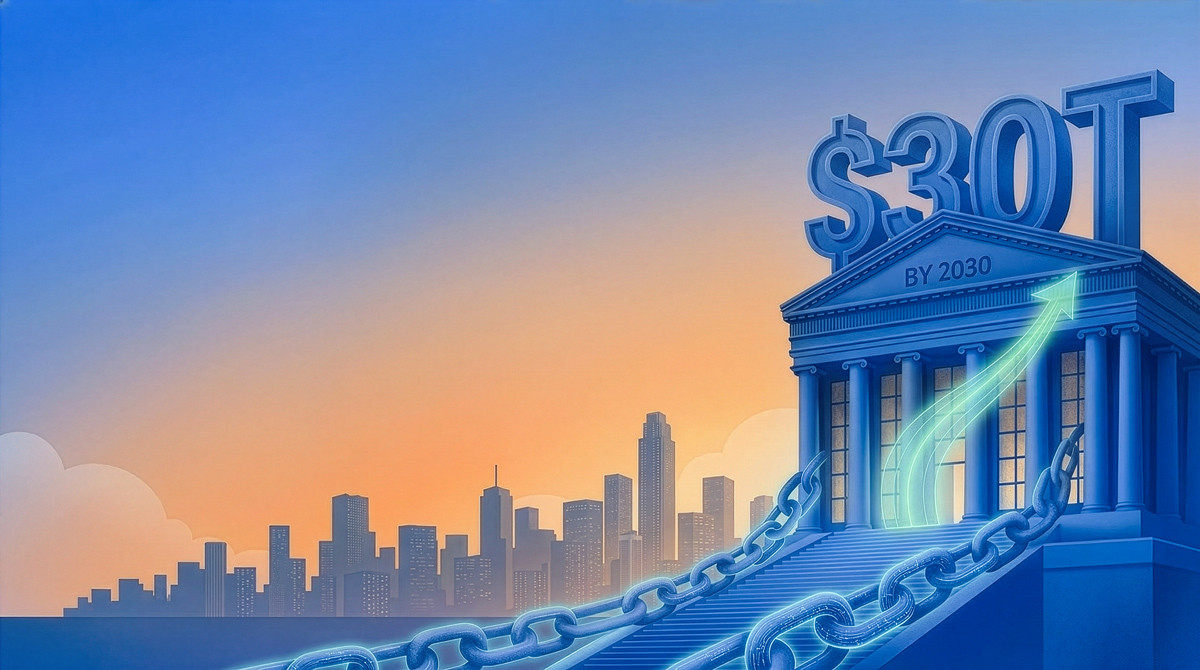
There's a number that keeps showing up in boardrooms, articles, and on earnings calls: $30 trillion.
That's Standard Chartered's projection for tokenized real-world assets by 2030. BCG and Ripple estimate $9.4 trillion. McKinsey says $2 trillion. Even at the low end, we're talking about a fundamental restructuring of how the world owns, trades, and values assets.
BlackRock CEO Larry Fink hasn't been subtle about where he stands. "Every asset can be tokenized," he wrote in his 2025 letter to investors, then backed it with capital. BlackRock's BUIDL fund, a tokenized U.S. Treasury vehicle, has gathered over $2.5 billion since its March 2024 launch. Franklin Templeton, JPMorgan, and HSBC are all building on-chain infrastructure. The institutional migration isn't coming. It's here.
At RWA.io, we've spent the past year studying this migration in granular detail. Our State of RWA Tokenization 2026 report, developed with input from 15 industry leaders including Coinbase, Franklin Templeton, Chainlink Labs, and Ondo Finance, puts the current tokenized asset market at $36.27 billion as of November 2025. That's 2,200% growth from just a few years ago, with over 500,000 holders now participating in on-chain real-world assets globally.
But the report also uncovered something that should give every participant in this market pause.
The $1.3 Billion Problem Nobody's Talking About
Growth is meaningless if the infrastructure beneath it is fractured. When digital backends fight one another, the paradigm never shifts. Resources wasted in competition could be reallocated to collaboration with the right framework.
Our research found that identical tokenized assets trade at 1–3% price discrepancies across different blockchain networks. Moving capital between chains costs investors 2–5% per transaction in fees and slippage. This fragmentation drags $600 million to $1.3 billion in value out of the market annually, all from a $36 billion base. If those friction patterns persist as the market scales toward $16–30 trillion, we're looking at $30–75 billion per year in lost value.
This is a structural crisis in an industry that was meant to add value and cut margins rather than increase complexity. But the problem gets worse.
On-chain operational failures drove a 143% increase in financial losses during the first half of 2025 compared to all of 2024. For executives tasked with recommending a tokenization strategy to their boards, that's a deeply uncomfortable combination of opportunity and risk. For the most important additions to their tech stack they have to ask their board to roll the dice. If this tokenized future is inevitable then the platforms must be ready to meet the trillion dollar
What the Road to 2030 Actually Requires
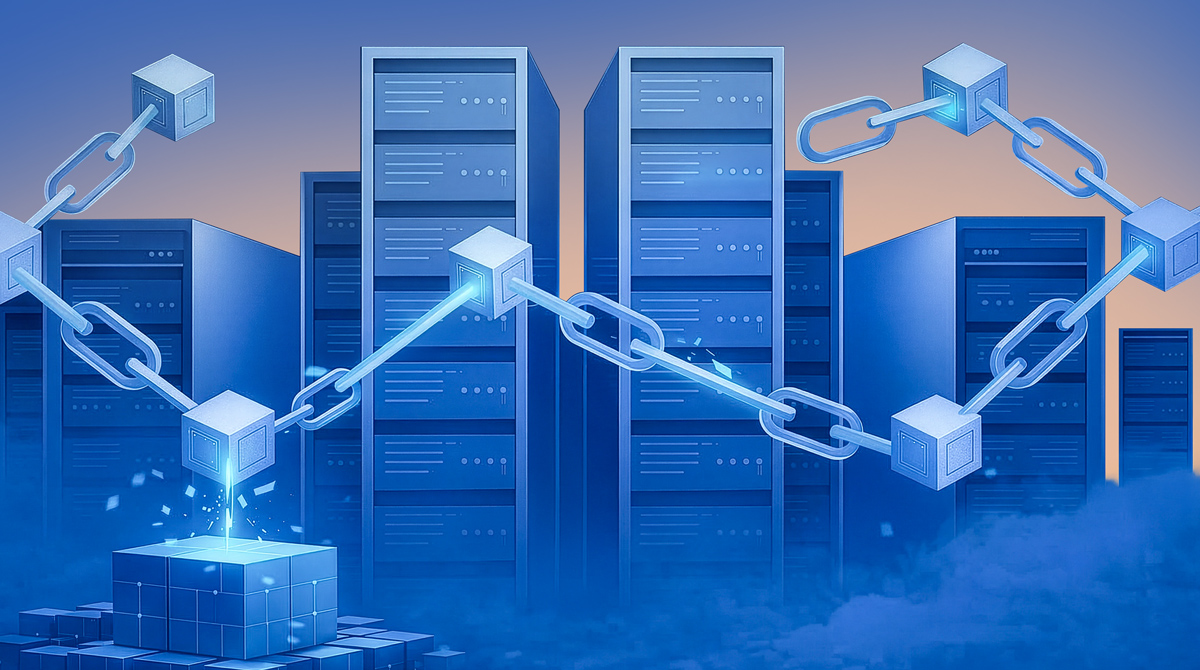
The conversation around tokenization tends to focus on assets: which bonds are moving on-chain, which real estate funds are next. But the real race to 2030 isn't about individual assets. It's about the connective tissue between them. During the California gold rush, the most successful businesses didn't trade minerals, they sold pick axes and built infrastructure.
Our report proposes what we call the Interoperability Stack: a multi-layered framework combining transport protocols like Chainlink's CCIP and Cosmos IBC with standardized service layers and intelligent orchestration. It's the infrastructure that allows a developer building a DeFi lending protocol to seamlessly integrate tokenized Treasury collateral from one chain with real estate-backed tokens from another. It's what enables a small business owner to tokenize receivables and access global liquidity without needing a PhD in blockchain architecture. And it's what gives compliance teams at regulated institutions the visibility they need across fragmented networks.
At RWA.io, we're building toward this through our five-pillar platform, spanning asset creation, governance, liquidity pools, ecosystem integration, and the RWA Operating System for developers. Our $250,000 accelerator grant program is funding multiple projects in 2026, each extending the ecosystems application in asset classes, locations, and use cases.
We published the State of RWA Tokenization 2026 report not because we had all the answers, but because the industry needs a shared map. When Coinbase's Kevin Leffew describes standardized payments as the missing bridge to the machine-to-machine economy, or when Ondo Finance's Ian De Bode calls on-chain access to U.S. capital markets a generational opportunity, these aren't competing visions. They're pieces of a puzzle that only works when assembled together.
Why We Believe RWA.io Will Lead This Market
The firms that will define the tokenized asset landscape by 2030 won't be the ones with the loudest marketing. They'll be the ones that solved the hardest problems first: interoperability across fragmented networks, compliance frameworks that satisfy both DeFi protocols and regulated institutions, and tooling accessible enough for a mid-market business owner yet robust enough for a sovereign wealth fund.
That's the bet we're making. Here is our thesis: the tokenized economy will only reach its potential if someone builds the infrastructure layer that connects all of it. This isn't one chain or a single asset class. It's not one regulatory regime. For this important transition to work there must be a single infrastructure for everyone. It has to be trusted, reliable, transparent, and easy to onboard.
The market projections, whether you favor $30 trillion or $9.4 trillion, all depend on the same condition. The plumbing has to work. The chains have to talk to each other without loss of value or fidelity. The compliance has to be embedded, not bolted on. The developer experience has to be good enough that builders choose this over the alternative.
We're four years from 2030. The race starts now.
The State of RWA Tokenization 2026 report is available at here.